Trump signs EO banning federal funding for gain-of-function research in high-risk nations
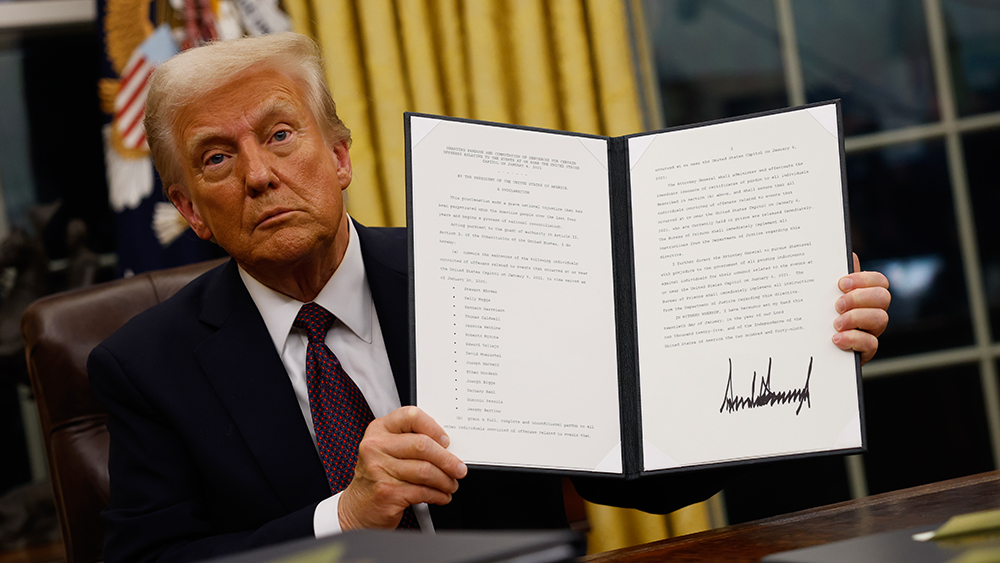
President Trump signed an order stopping federal funding for gain-of-function research in countries with weak oversight (e.g., China, Iran), aiming to prevent future pandemics. The policy explicitly targeted institutions like the Wuhan Institute of Virology (WIV) and EcoHealth Alliance (EHA).
The order addressed concerns that gain-of-function studies — which enhance pathogen transmissibility or lethality — may have contributed to COVID-19. Trump framed the move as critical for public health and national security.
The administration cited past lab incidents (e.g., the 1977 Russian flu) and recent safety lapses (e.g., WIV containment breaches) as justification. Critics argue such research, especially abroad, poses catastrophic risks with little oversight.
The order followed years of debate, including a 2014 Obama-era moratorium on gain-of-function studies (with exceptions). It highlighted controversial NIH grants to EHA and WIV for bat coronavirus research, which some allege involved dangerous experiments.
While banning funding for foreign high-risk studies, the order exempts essential domestic biodefense research. It reflects bipartisan concerns over lab safety and marks a policy shift toward caution in potentially hazardous research.
The EO signed Monday, May 5, sought to prevent future pandemics. In particular, it targets gain-of-function research – studies that enhance the transmissibility or lethality of pathogens. According to some scientists, gain of function research may have contributed to the Wuhan coronavirus (COVID-19) pandemic.
Trump framed the decision as a critical step in safeguarding public health and national security, declaring, “It could have been that we wouldn’t have had the problem we had.” He was joined by Health Secretary Robert F. Kennedy Jr. and National Institutes of Health Director Dr. Jay Bhattacharya during the Monday signing at the Oval Office.
The EO builds on long-standing concerns about the dangers of gain-of-function research, which involves modifying viruses to study their potential effects on humans. Critics argue such experiments, particularly those conducted abroad with minimal oversight, pose catastrophic risks.
The White House explicitly cited the Wuhan Institute of Virology (WIV) and the EcoHealth Alliance (EHA) in a fact sheet about the order as examples of the kind of research now barred from U.S. funding. These two entities are embroiled in controversy over their bat coronavirus studies that eventually culminated in the pandemic.
“These measures will drastically reduce the potential for lab-related incidents,” the administration stated, Historical precedents such as the 1977 Russian flu – suspected to have leaked from a Soviet lab – and the 1976 swine flu vaccine debacle underscore the perils of unchecked biological research.
How U.S. money may have spawned a pandemic
The decision follows years of scrutiny over the role of U.S.-funded research in pandemic risks. In 2014, the Obama administration imposed a moratorium on gain-of-function studies, but exceptions were granted for projects deemed “urgently necessary.”
Kennedy hailed the order, noting that “in all of the history of gain-of-function research, we cannot point to a single good thing that has come of it.” Bhattacharya meanwhile emphasized the need for public accountability, arguing that “only scientists alone won’t be able to decide” whether high-risk research proceeds.
The EO also reflects growing bipartisan unease over lab safety. Reports of containment breaches, including a 2004 Science investigation highlighting lab accidents and 2020 Department of State cables warning of safety lapses at the WIV, have fueled calls for stricter oversight. The Trump administration further reinforced its stance by launching a website titled “Lab Leak: The True Origins of COVID-19,” asserting that SARS-CoV-2 likely escaped from the WIV’s facility in China’s central Hubei province.
While the order restricts funding abroad, it exempts domestic studies deemed essential for biodefense, balancing security concerns with scientific progress. As debates over COVID-19’s origins persist, Trump’s executive order marks a pivotal shift in U.S. policy, prioritizing caution over controversial research that could spark the next global outbreak.
Survivors of the Nottingham attacks have spoken for the first time about the devastating effect on their lives - with one saying she wishes she'd died instead of the two students.Sharon Miller and Wayne Birkett were among three people who survived when Valdo Calocane ploughed into them with a van he'd stolen from 65-year-old Ian Coates, after stabbing him to death.Calocane had already killed Grace O'Malley-Kumar and Barnaby Webber as […]








Post comments (0)