Report: Trump would-be shooter Crooks was designing a BOMB before his failed assassination attempt
Seven months before his assassination attempt on President Trump, Thomas Matthew Crooks tried to purchase nitromethane (an explosive chemical) under an alias, suggesting a broader, deadlier plot.
Encrypted emails reveal Crooks grew frustrated when his nitromethane order was delayed, using his community college account – a rare lapse in operational secrecy.
Despite being a high-achieving engineering student (1530 SAT, praised projects), Crooks expressed anti-authority views in essays, criticizing Trump and comparing government actions to Orwellian oppression.
Investigators haven’t confirmed if Crooks intended to use explosives in the attack or abandoned the plan. His college records were subpoenaed, but key details remain undisclosed.
The nitromethane trail raises concerns: If intercepted, why wasn’t Crooks flagged sooner? The lack of transparency leaves critical questions unresolved about the near-historic attack.
Newly obtained emails reveal Crooks attempted to purchase more than two gallons of nitromethane – a volatile chemical used in explosives – from an online fuel retailer in January 2024. The revelation, first reported by CBS News, raises urgent questions about whether Crooks’ failed assassination attempt on Trump was part of a broader, deadlier plot.
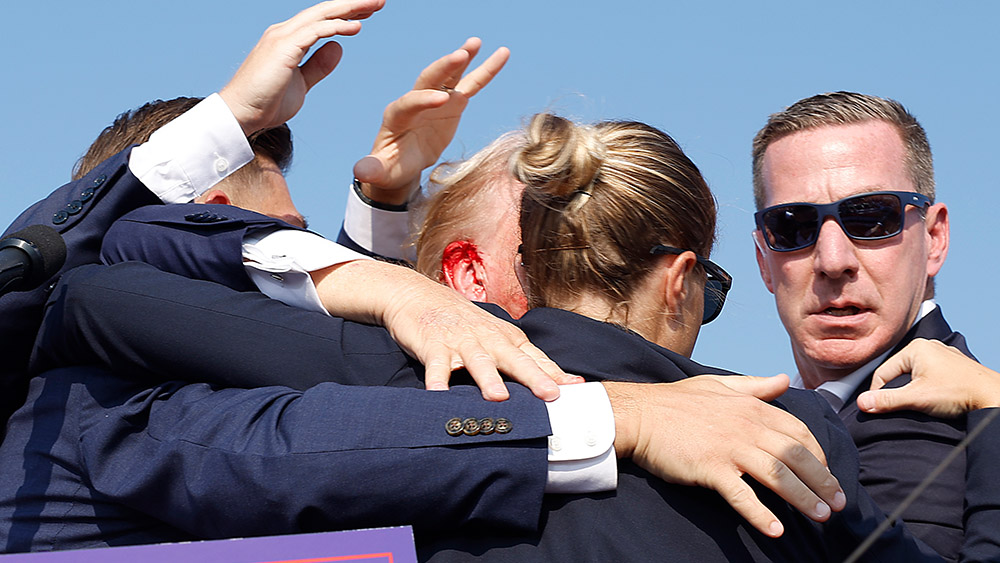
Crooks, who fatally wounded one spectator and grazed Trump’s ear before being killed by Secret Service agents, had meticulously researched bomb-making materials, according to Federal Bureau of Investigation Special Agent Kevin Rojek. His encrypted email exchanges with the supplier Hyperfuels show he grew impatient when his nitromethane order – placed under the alias “Thomas” – failed to ship promptly.
“I was wondering if you still have it and when I can expect it to come,” he wrote on Jan. 31, 2024, using his community college account, a rare lapse in operational secrecy. Experts speculate that a backpack-sized device using nitromethane could have had a lethal blast radius of 30 feet, while a larger ammonium nitrate bomb might have leveled a small building.
How a near-perfect student became America’s most mysterious shooter
The emails paint a jarring contrast. Crooks was simultaneously drafting transfer applications to the University of Pittsburgh, where professors praised his “above and beyond” engineering projects, including a Braille chessboard for his visually impaired mother.
Yet his academic work also betrayed deep skepticism of authority. In one essay, he criticized Trump’s withdrawal from the Iran nuclear deal. In another, he likened government overreach to Orwellian imperialism.
His SAT score of 1530 and near-perfect grades suggest a sharp, disciplined mind – making his violent turn all the more perplexing. Federal investigators have yet to confirm whether Crooks intended to deploy explosives alongside his rifle attack or if he abandoned the plan due to logistical hurdles.
A federal grand jury subpoenaed his college records weeks after the shooting, but no further indictments have been made. Pennsylvania lawyer Wally Zimolong, who secured the documents through a transparency lawsuit, questions why key details remain shrouded. “A year later, we still don’t know enough,” he told CBS News.
The attempted assassination – the first serious threat to a U.S. president since Ronald Reagan’s 1981 shooting – has faded from headlines, eclipsed by political turbulence and institutional reticence. Yet the nitromethane trail underscores gaps in the official narrative. (Related: FBI Director Wray reveals Trump shooter apparently researched JFK assassination.)
If Crooks’ bomb materials were never delivered, where did they go? If they were intercepted, why wasn’t he flagged sooner? The answers, like Crooks’ encrypted correspondence, remain locked away – a haunting footnote to an attack that nearly rewrote history.
The polls are now open in the Hamilton, Larkhall and Stonehouse by-election.It comes following the death of SNP government minister Christina McKelvie. The MSP died in March at the age of 57, having last year taken medical leave to undergo treatment for secondary breast cancer.Ms McKelvie, the minister for drugs and alcohol policy, had been an MSP since 2007 and represented the Central Scotland region up to 2011 before going […]






Post comments (0)